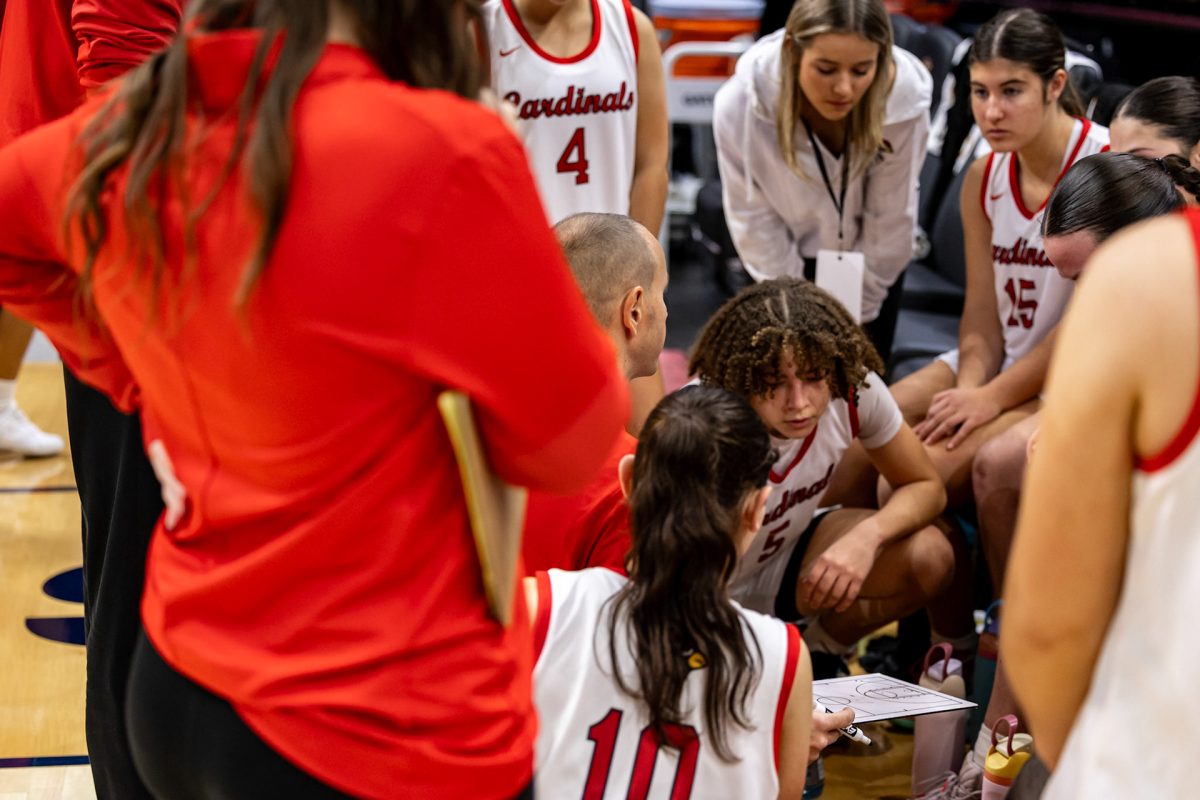
On any given afternoon, the hallways of the high school empty quickly, but for many students, the day is far from over. They filter into theaters, gyms, practice fields, and meeting rooms, swapping textbooks for scripts, jerseys, or debate binders. For Mentor High School students like Maggie Coughlin, Juliana Nichols, Giuseppe “Jojo” LoDuca, and Kayden McKinney, the challenge isn’t choosing between school and extracurriculars. It’s learning how to carry both without dropping either.
For Maggie, a junior immersed in the world of theater, extracurriculars are a gateway to community. “You find a lot of new friends you wouldn’t have met in other classes,” she said. “It enriches your whole high school experience.” But the curtain call comes with a cost: late nights, weekend rehearsals, and the constant juggling of responsibilities.
In order to keep her footing, Maggie relies on organization, lots of it. “I use Google Tasks to figure out what I need to do. Lists and calendars help a lot,” she explained. “The visual is super helpful.”
When theater gets overwhelming, she communicates her problems with teachers and peers. “I talk to teachers, express my schedule, and ask for help. Talking to friends helps, too.” And when the balance slips? “I express the struggles, ask for an extension, or seek help on certain subjects,” she said.
Senior Juliana Nichols, who divides her time between Model UN, Speech and Debate, and softball, calls her extracurriculars “opportunities.” They’ve taken her across Ohio, into national competitions, and even to an international conference in Chicago.
However, the opportunities come with pressure. Balancing travel and schoolwork once left her scrambling, especially as a freshman. Now, she keeps everything flowing with a system only she could love: a massive, color-coded spreadsheet. “Its a little overwhelming for some people,” she admitted, “but it really helps me to cross something out when I’ve completed it.”
And when the workload becomes too heavy, she has a simple rule. “I just make sure that I prioritize my schoolwork over any extracurricular.” Juliana also leans on her teachers, who she said have been “very understanding and supportive.” When she’s overwhelmed, she talks to them. “I just explain that I may be a little behind, and they’ve always helped me move forward,” she said.
On the football field, senior Jojo DoLuca views his sport as training for life as much as athletics. “You’re put to a higher standard,” he said. “You have to learn responsibility and time management.”
Nonetheless, even the most disciplined athlete hits breaking points. Some days, the exhaustion from practice makes focusing on homework nearly impossible. Jojo keeps himself grounded with simple, steady routines. “I like to set reminders or write out things I have for the day,” he said. “Knowing what time I have to turn things in and when I have practice makes it a lot easier.”
When the balance tips the wrong way, Jojo steps back to reset. “I take a deep breath, and set out things I need to do. I think about what happened and see what put me out of balance to make sure it doesn’t happen again.” Still, he doesn’t expect special treatment. “Just because I’m in a sport, I don’t want special treatment. I just express what happened and get the help I need.”
For senior Kayden McKinney, volleyball is more than a sport, it’s a lifeline. “Its like a coping mechanism,” she said. “It helps me get through hard things.” But the daily routine is relentless. “You go from practice to home. By the time you shower and eat, it’s already late, and you still have homework.”
Her strategy is strict but effective. “I try to get everything done at a reasonable time,” she explained. “I split my work into pieces. Time management is super important.” She also uses study halls to her advantage and isn’t afraid to sacrifice social plans when needed.
Communication is her fallback when things get tough. “Talking to teachers and coaches is super helpful. Communicate your time and see if you can push back due dates,” she said. And when she’s slipping out of balance? She keeps it honest. “I just tell them how it is, explain the practice times and things. You have to stick to what you say to keep the trust.”
Senior Ayesha Faruki, who participates in both Speech and Debate and Science Olympiad, sees extracurricular as a bridge to real-world learning. “You can really gain experiences you’d never receive otherwise in the classroom,” she said. Her academic and extracurricular lives often overlap, sometimes in her favor. “Science Olympiad aligns with my classes, so I learn things ahead of time and specialize in what I’m interested in.”
To stay balanced she builds her week intentionally, carving out time blocks for both schoolwork and club commitments. “Some days are really heavy extracurricular–wise, so I prioritize which classes I need to focus on and split my time the rest of the week.”
When she feels out of balance, she isn’t afraid to step back. “Sometimes I just need to take a break. It’s often okay to take a brief extracurricular break, so I can focus on school.” She’s also fortunate that many of her teachers double as her club advisors. “They understand if I miss a day for a tournament or was away all weekend.”
Across these activities and personalities, one thread is clear. Balance isn’t a natural skill. It’s a learned one, shaped by checklists, calendars, deep breaths, and honest conversations.
Despite tight schedules and late nights, all four students return again and again to why they stay involved: the friendships, the passion, the confidence, and the sense of purpose extracurricular activities offer.
“You gotta love it to do it,” Jojo said simply.
And for these students, that love seems to tip the scales in their favor.