

Juniors, if you’re like me you probably took AP Statistics and upon reaching the end of the class realized you’d like to do more with statistics in the future. But upon that realization it is even more likely you’ve fallen down the rabbit hole that is college majors. So I’m here to hopefully save you the time of flipping between Google tabs. This is my list I’ve compiled of the various majors and minors that I’ve researched and why you might choose them.
Data Science vs. Data Analytics

This is easily the most important difference to understand. Data science tends to focus on employing techniques to collect data to predict future outcomes. For instance, clinical trials rely heavily on data science. (Note that: most clinical researchers have a masters and take courses in Biostatistics to help design and analyze their studies.) The experiment is organized in a way to collect the most representative data possible, and then the results are used to predict if the future outcome will likely be a safe one for those prescribed a drug. However, most data scientists are using extremely large sets of data and using them for predictions. For instance, large scale surveys are often analyzed by a data scientist because they receive thousands of results.
Analytics, as it implies, involves pre-existing data and using various software to take the data and apply it to problems. A common example of this, which you’ve possibly dabbled in, is your social media statistics for a professional account. The data here helps show populations who engage with your content, and this helps you find what you need to post to reach your target audience. In a professional setting, analytics roles often involve industries like insurance. If you’re particularly interested in that field, actuarial science offers strong job security (almost guaranteed job placement even before you finish your degree). As an insurance data specialist, you will look at data and information about a potential client to determine what their insurance rate should be to limit cost to the insurance company.
As far as education goes, both majors require programming, but analytics students usually focus more on using these tools to clean, visualize, and communicate data insights. By contrast, data science students use programming for building models and algorithms that make predictions. Languages for analytics are typically Excel, languages like R & SQL (Structured Query Language, a standard programming language), and data visualization. It is important to note that data scientists also must learn Python, R, HTML (occasionally), and SQL, but they use this slightly less for visualization; that component is often handed off to the people reporting the information.
More Niche Jobs from a Variety of Majors

Financial Analyst: Assess investments, forecast market outcomes, and review financial data. This job commonly overlaps with the responsibilities of economists. Most people with this job have one of the following degrees: finance, economics, accounting, mathematics, and occasionally data science or analytics.

Market Researcher: Analyze consumer behavior and market trends to help companies make strategic decisions. For instance, many film companies require a market researcher to decide what movies should be pursued and what shouldn’t because the current population of viewers doesn’t align with the movie’s intended audience. Most people with this job have one of the following degrees: marketing, business administration, economics, statistics (data science or data analytics), communications, or sometimes a related social science, such as psychology or sociology.
Bio-statistician: Apply statistical methods to medical and public health research like drug clinical trials or surgery effects. Most people take on organizing study designs or other leadership roles until they receive a master’s in bio-statistics. While this is common in various fields it is far stricter because a poorly designed study could cause harm to participants. Moreover, most people start with these bachelor’s majors: mathematics, statistics, biology, or public health.
Actuary: Evaluate financial risks for businesses, often in the insurance industry, but this can also be for companies that invest a lot, like tech companies. Common degrees include bachelor’s degrees in actuarial science, mathematics, or statistics.
Economist: Analyze economic data and trends to forecast market outcomes, like that for specific companies or for the general market. For entry-level positions, many receive a bachelor’s in economics, and this will incorporate many data-related classes. However, in order to get higher in the field, one will need either a master’s or their Ph. D. in economics.
If I pursue a major in data science, what should I potentially minor in?
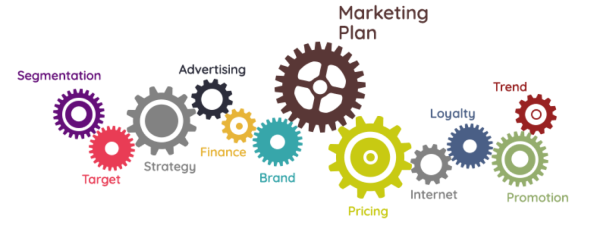
Marketing: If you’re interested in using large surveys to find how best to market a product or service. Alternatively, if you end up not using much statistical analysis in your job (which is unlikely but possible), you can utilize the skills you’ll gain in various programming languages. For instance, having taken HTML, you can create interesting websites that invite people to your product. Also, it’s important to note that yes, marketing is likely at the core of your job if this is your minor. People often put marketing as a minor though because it’s less risky than majoring in marketing because for most employers a minor is enough for the job so long as you can prove your skills. Whereas, often a minor in data science is not sufficient for a data processing job.

Mathematics, Computer Programming, or Information Technology: Any of these minors are ideal if you want to use your minor as a way to enhance the skills you already learn as a data scientist. As for what skills they enhance, it’s very intuitive with the name of the minor. Mathematics will provide more of the skills to find statistical values with less computer assistance. Computer programming will teach other languages like C, which you could potentially use in a data-related job, but if not, it may simply make learning languages related to your major easier. Finally, information technology will help a lot with the processing side of data science, specifically for extremely large sets of data.
Anything you want: Okay, I know what you’re thinking: “Obviously I can choose whatever minor I want.” However, sometimes this isn’t so intuitive. We often get ourselves so wrapped up in the application and decision process that we forget a minor is in there partially so you can explore and gain skills in a different path. I personally will likely choose to minor in graphic design because that was always my original passion, and a minor provides me a less risky way to possibly pursue that dream.
What school should I apply to?
The polls are wide on the best place to go. Nearby Kent State has one of the best statistics programs in the country, so that is a safe bet if you want to remain in state. However, the college where you got your degree is often less important to employers than the degree you have earned. They simply want to see that you went to one and were dedicated/determined enough to graduate, so don’t let it be an additional stress for you.
Overall, the college process is definitely a complex one and one that I advise you spend a significant amount of your own time trying to navigate. This is merely a condensed list of some of the common information I’ve found, and there’s a plethora of other information.