

This article discusses sensitive topics, including child pornography and abuse.
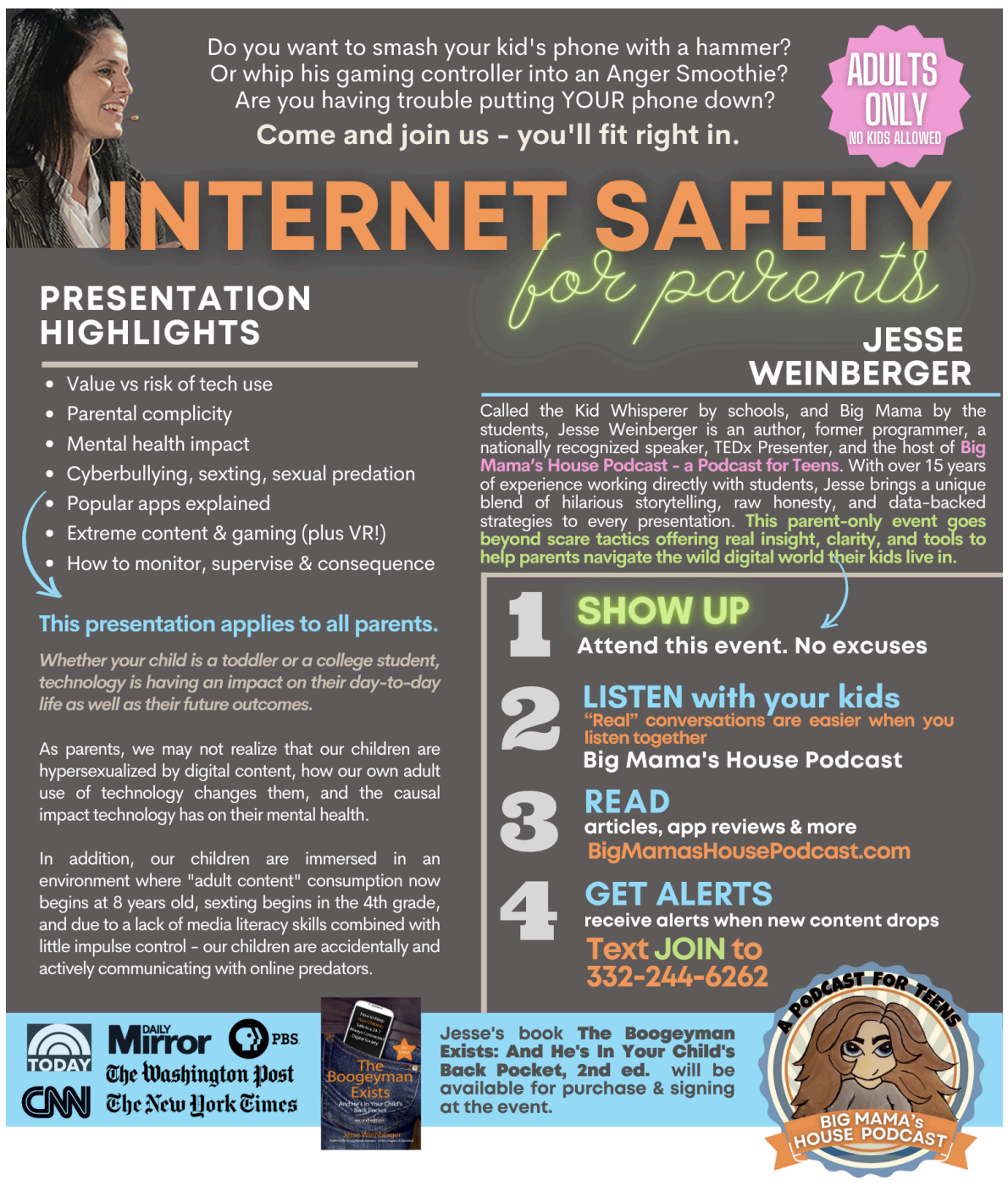
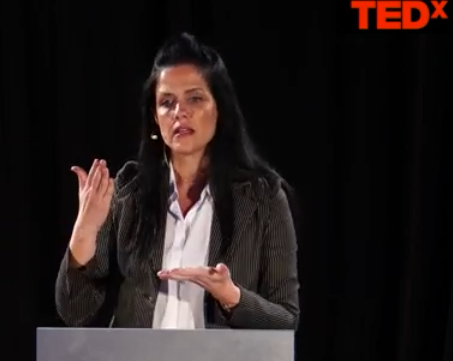
Jesse Weinberger, known through her podcasts and online presence as “Big Mama,” visited Mentor High School over multiple weeks in November. Here, she brought energetic presentations to all grade levels on internet safety, an increasingly important issue for students nationwide. Amid rising technology use among young children, protecting online personas is a crucial topic that Weinberger spent well over an hour discussing with thousands of students across all high school grade levels. Here, students learned valuable information about how their internet usage is tracked.
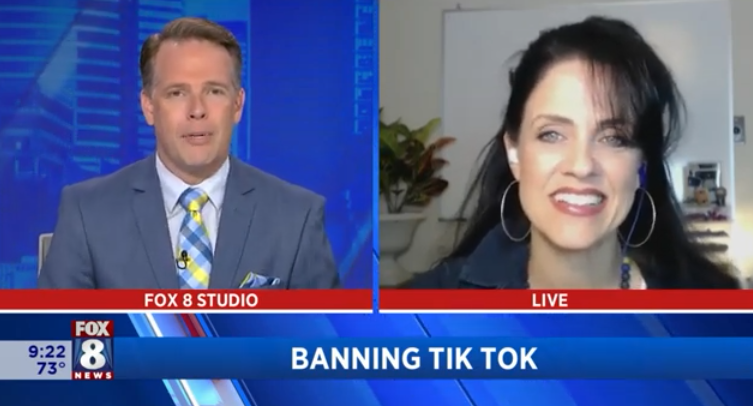
With podcast topics ranging from encouraging parents to be more attentive to children’s online activities to explaining Fortnite Battle Royale, Weinberger has covered many aspects of internet safety. Although she does not have a collegiate education, she has spoken at hundreds of schools and professes to have “over 15 years of experience working directly with students.” Weinberger has also published the book “The Boogeyman Exists: And He’s In Your Child’s Back Pocket,” which details tips for parents regarding their children’s online safety.
The Internet: Not All Sunshine and Rainbows

Weinberger spoke to students on various topics, but the overarching theme was internet safety, including digital footprints and exposure to outside threats. In regard to digital footprints, “Big Mama” gave heartfelt messages to students, encouraging them to be wary of their online footprints. Here, she discussed the various online accounts that many students hold, including Snapchat, Instagram, Discord, YouTube, and X. Weinberger told students that predators are often found on these platforms, and may not always appear to be dangerous, citing multiple case studies where minors have been “catfished” by predators pretending to be other people, such as other children. In some scenarios, children were approached in real life due to the information available online.
To prevent these scenarios, Weinberger encouraged children to remove any information from any online account that has traces to their location, age, or last name – all of which can be used by bad actors. While “Big Mama” did not tell students to delete their accounts altogether, she was adamant that a large online presence could place children at risk. Importantly, she stressed the idea that law enforcement should always be involved if threatening individuals are present online, regardless of messaging from predators that might warn otherwise.
Do You Have Porn on Your Phone?

A large section of Weinberger’s presentation was dedicated to the dangerous world of pornography. Importantly, she discussed how even unintentionally coming into contact with any form of pornography can be dangerous, especially when the content can include minors. For children, Snapchat can be a dangerous trap, where “Snapping” (sending photos) to other people is common. Here, the opening of a Snap that includes inappropriate material can place the recipient at risk, even if they never intended to receive such content. Similar themes can be applied to other social media platforms, such as X, where individuals can message accounts without prior approval, allowing inappropriate material to be sent and received with ease, even if recipients do not wish to receive such material.
In her presentation, Weinberger discussed a vague “black box” that law enforcement can use to track every single piece of information a person’s phone has ever recorded. Talking to students, Weinberger warned that the everyday use of personal devices tracks our movements, interests, interactions, and motivations, making police investigations simple.

While Weinberger did not elaborate on the devices in specific detail, further digging led to products like the Cellebrite Universal Forensic Extraction Device (UFED), which scrapes a connected device of its internal data. If individuals have ever come into contact with material, such as pornographic content involving minors, Weinberger warned that the “black box” would track that information, though she did not concretely substantiate her claim. Regardless, her warning was clear: your online actions are not private, no matter how much effort you take to ensure they are. This includes nefarious activities but also spans to innocent internet users who are unwillingly the recipients of inappropriate material.
Fearmongering or Informative Discussion?
Following the presentation, many students walked away significantly impacted, but not always entirely in the way it was intended. Weinberger took a dramatic approach to her presentation, highlighting scenarios in which students were affected by online predators or were arrested for illegal behaviors. As a result, some students were deterred by her message, while others were drawn in out of concern.
Some students across various grade levels provided input. Senior Ethan Burress commented that the issue was one worth sharing, but questioned the means by which it was presented. “It felt like she was shouting at us for something we have no connection to,” Ethan said.
A common theme across most of the students Cardinal Nation spoke to was an opinion that their time was better spent on other topics, as they did not see this issue as one that particularly pertained to their daily lives. Junior Max O’Donnell, who was pleased at Weinberger’s passion for the topic, said much of the content of the presentation was “self-explanatory.” Regarding the case studies brought up during the presentation, Senior Robert Knutson thought that the content was largely “obvious.”
Ethan further noted that her use of examples relating to predators online did not apply to the vast majority of Mentor students, especially those in high school: “As High Schoolers, the majority of us are self-aware about a lot of the stuff [Weinberger] was teaching, so we did not gain a lot of information.” Ethan further brought up that many mature students would have the awareness to recognize when a predator was speaking to them, and would avoid the scenario altogether: a sentiment shared by Max.
Still, students left feeling significantly impacted, and many shared ideas about how they would alter their digital footprint following the presentation. Freshman Ella Kosher commented that the presentation was a beneficial experience for students, educating them on the proper way to “keep themselves safe with ever-changing technology in a new world.” Robert even said that the case studies brought up in the presentation made him “question society.”