

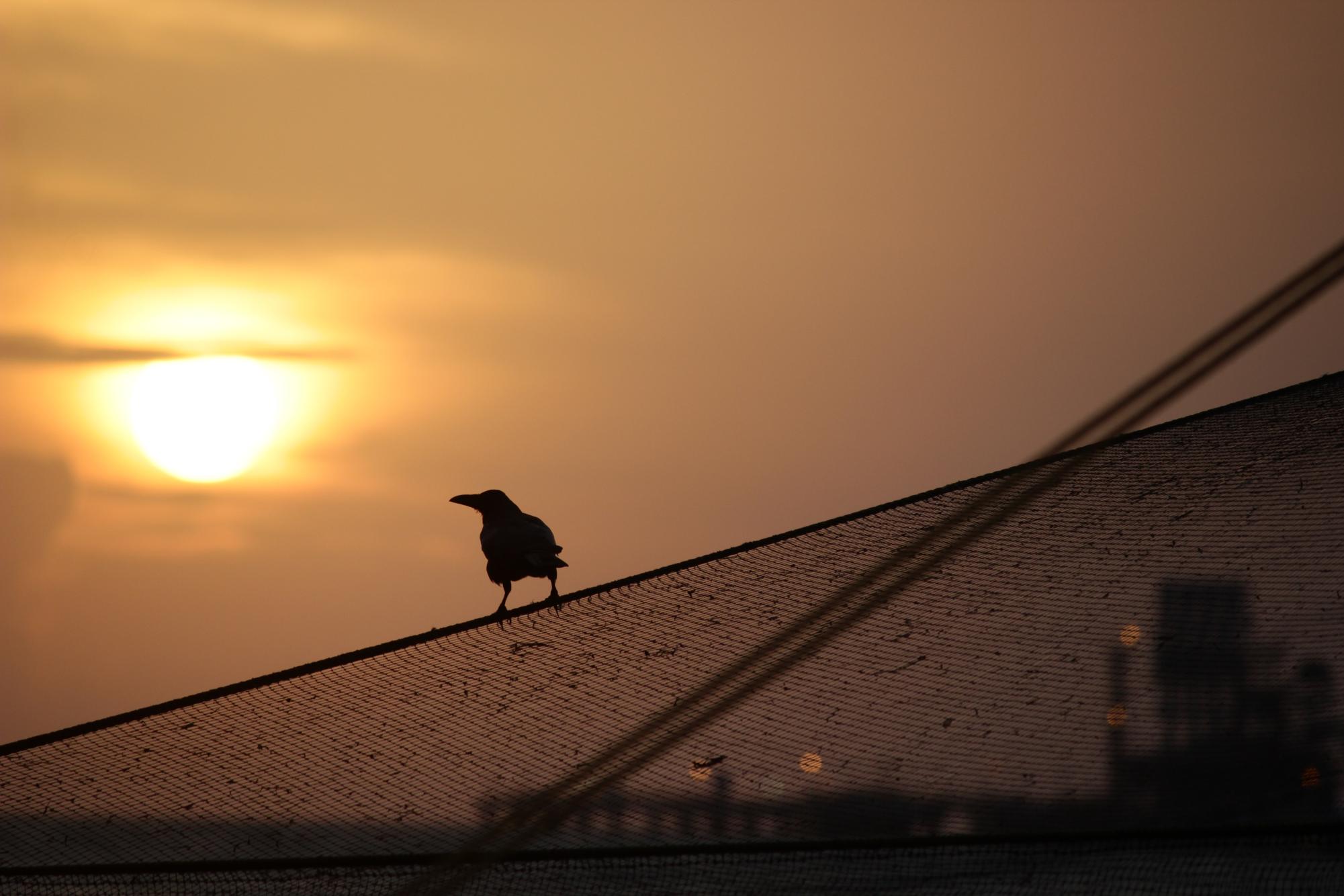
A Crow Gazing at the Sun
You’ll find my soul in every jagged edge,
in every blue-green shard of a glass fallen from a ledge,
I am the insect, wingless,
crawling in your garden,
overcome by heavy-footed burden,
once airborne, but now earthbound,
consumed by an agonizing aching for a flight away from grass so spring-less,
I am the silence where the lost are found but drown’d,
a ghost within the shadows,
where darkness cascades down like the languid lustrous liquid organza of crows
to dim the glow of my blue-grey eyes,
I am the salt in the wound of winter’s moonrise,
and the wreckage on the shoulder,
threatening the beholder
I am the scrap on eighty-sevens
turning
to rust
under the leaden weeping heavens
tears of blue that have bled,
bleeding…
thinning…
bleeding thin…
to grayscale
But you are such delight,
the sun’s golden gleam;
letting me feel freedom of exhale.
While in a foreign tongue to me you stream,
You cannot break this beautiful daydream.
Still, the butterfly’s blue iridescent light,
Is a ghost of you I have no right to claim.
Synopsis of my favorite details about this poem (from the author):
- I added this journey of color; it starts out and it’s blue-green, then you see blue-gray, and eventually then the blue sheds in tears of gray-scale– blue has become gray. Finally, then, it’s revealed the blue that’s fading is this light of the butterfly, representing the dwindling feeling of peace you find when you’re struggling.
- In the stages of flight, the speaker begins wingless, then finds flight in the shadow of birds, and finally crashes in the fourth stanza, representing the many stages I think a great many endure. You can start out feeling like serenity has been stolen from you, like a wingless insect that must learn to walk. But then it transitions sometimes to this feeling like your ability to fly maybe isn’t enough, and I choose to represent this by having the speaker become engulfed by a shadowy swarm of crows. Then other times serenity or peace can feel entirely unattainable, like a car crash, this feeling being represented in the physical merge to the ground. Finally we have this mix of having found but not fully grasped peace. It’s found in the wings of the butterfly, but it’s evasive, as it’s part of human nature to struggle. We are not ghosts; we’re alive, and we will struggle—that’s inevitable.
- Rhyming scheme: While this poem is free verse, not following a strict rhyme scheme, every line does have a rhyme with exactly one other line up until the very last line with “claim.” The lines before that rhyme show the imperfect illusion of thinking you can fully have peace permanently, each line a fragmented couplet showing how this journey is almost like a love you cannot marry or bind to. “Claim” is then a slant rhyme to “stream” and “daydream,” representing how peace is found, belongs, but is not fully connected. It can flee and find its way back like the sun setting and rising or a butterfly that comes and goes.
- Punctuation: In this poem you’ll notice there’s not a single stop until near the end of the poem at “exhale,” representing the struggle the speaker endures; they cannot break for air. And while naturally a person reading this would pause at various points, it’s as though the poem isn’t allowed to stop; it must keep going until it finds this light. And the structure even mimics this in the 5th stanza; the lines start to split and misalign visually, showing the speaker’s breath running out.
- The 3rd line of the 3rd stanza actually mimics the pace of a cascading waterfall; from ‘where’ to ‘like,’ the pace is still quick, like water in a waterfall that can stream freely—quickly. Then from ‘languid’ to ‘crows,’ the vowels and alliteration physically slow the pace at which you can read them, mimicking water as it travels along a stone ledge of a waterfall. The next line then returns to a fast pace as if this waterfall will continually repeat and not end. And this pattern, I feel, contributes to this idea of a cycle we all endure.


