
From October 24 to November 6, Mentor High School student Michelle Frumker participated in a mission trip to Israel to deepen her understanding of the country and support the local community. During the summer, fellow Mentor High School student Viktoriia Pavshok traveled to her native Ukraine to reunite with her family and witness firsthand the changes taking place in her homeland. Both students voluntarily traveled to countries affected by ongoing conflict—places with deep personal significance to them—and each felt compelled to share their experiences. This is what Viktoriia had to share. You can also read Michelle’s story on Cardinal Nation.
Traveling to Ukraine: Viktoriia Pavshok
I had been waiting for Michelle to come back from Israel so I could hear about her trip. The impatience of waiting and the worry for her safety had kept me on edge for all two weeks of her absence.
And then she returned—full of joy, new feelings, emotions, and experiences. It was wonderful!
Before her trip, I told her about my journey with my mom and sister to our homeland, Ukraine, and we decided to create a story—each of us about a country at war.
And this is my story…
The Journey To Ukraine
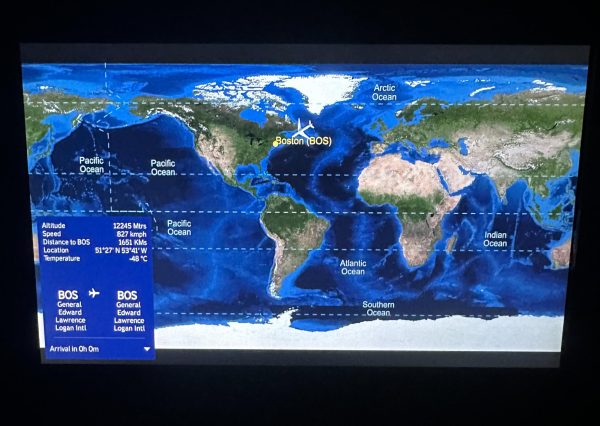
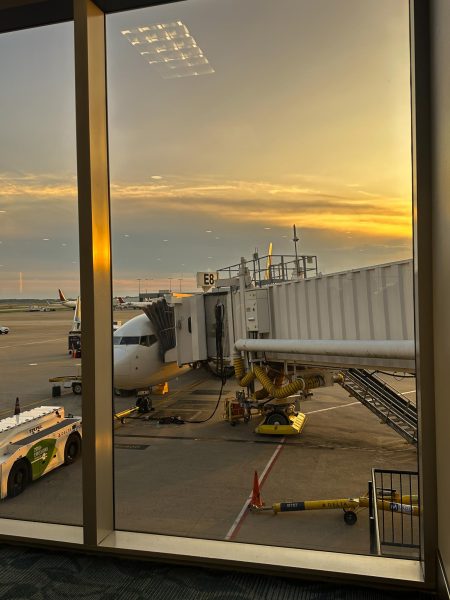
For a long time, our plane was not allowed to leave the airport in Boston—something was wrong. But after about a one-hour delay, we finally took off.
While flying across the ocean on our way to Copenhagen, Denmark, I noticed on the screen in front of me that the plane had turned around and our destination was once again Boston, not Copenhagen. It was nighttime, and we had already been flying for more than three hours and were nearing Greenland. There were no announcements, but the passengers on board also began to worry after seeing that the plane had turned around. A few minutes later, the captain made an announcement and said that the plane had a mechanical problem and he was not sure we would be able to cross the ocean, so we were forced to return to Boston…
It was a shock… We had waited a long 2.5 years for this trip to Ukraine. In my thoughts, I was already there—with my family, my friends, in my home. And then came three hours of fear and worry about whether we would even make it back safely. We landed back at 1 a.m. We were placed in a hotel and told to wait for a message about whether they would be able to find seats for us on another flight to Europe. It was awful!
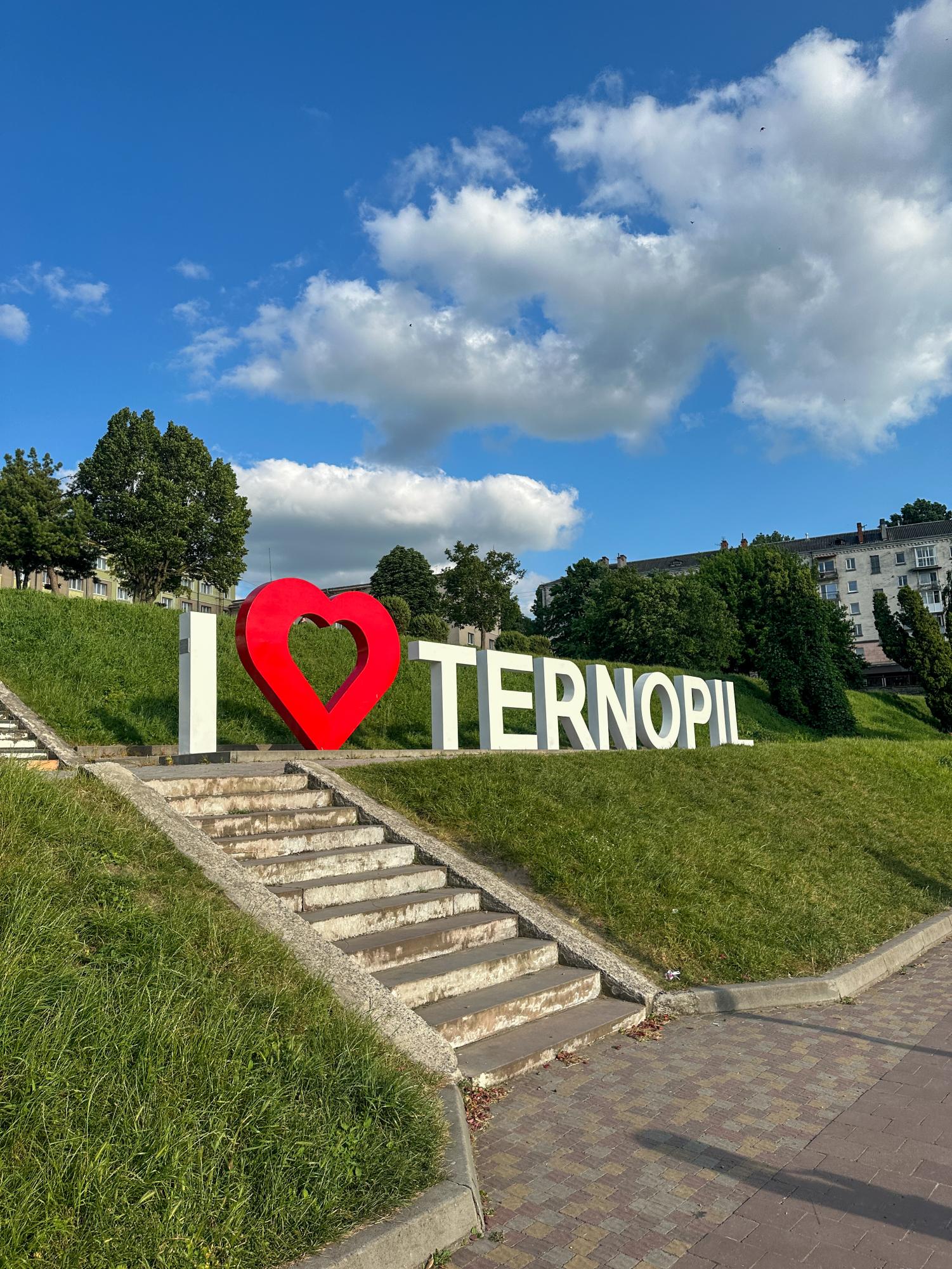
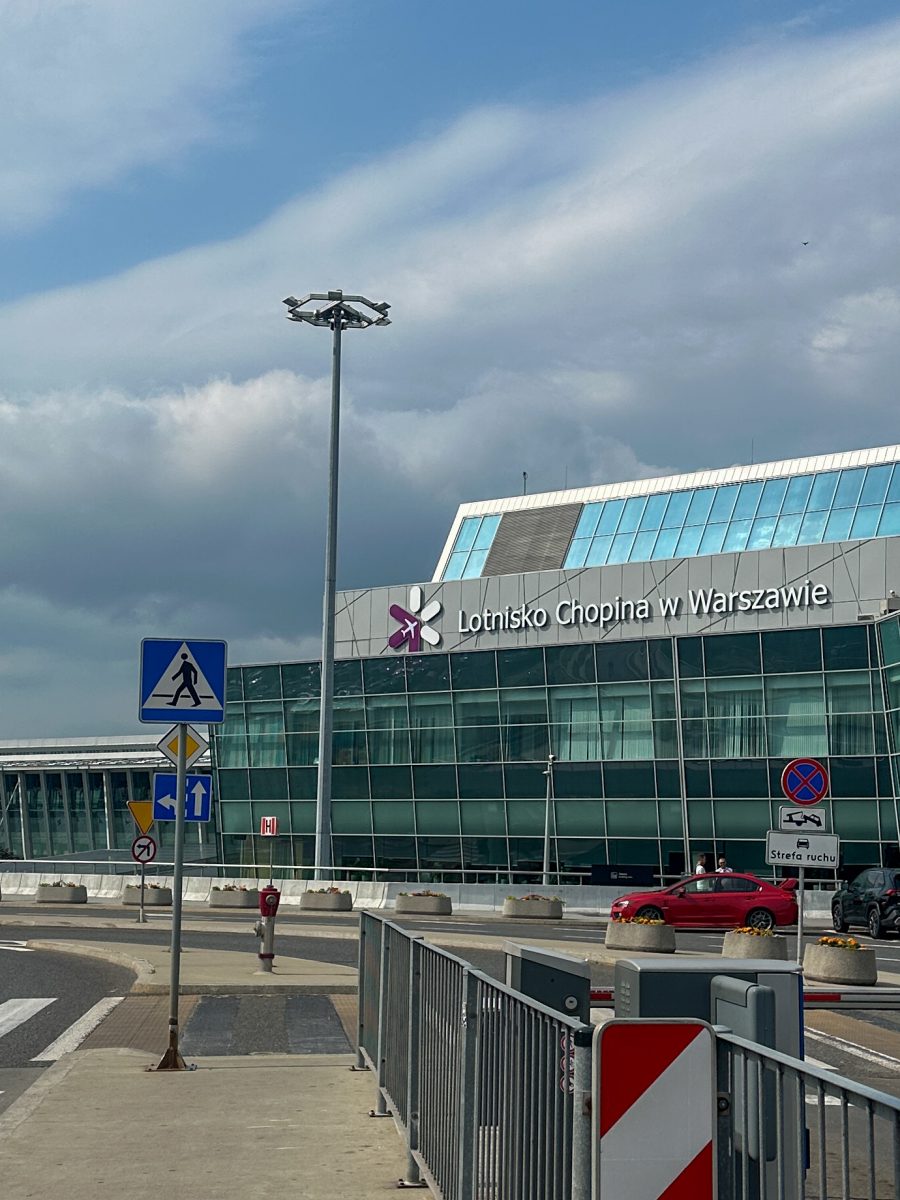
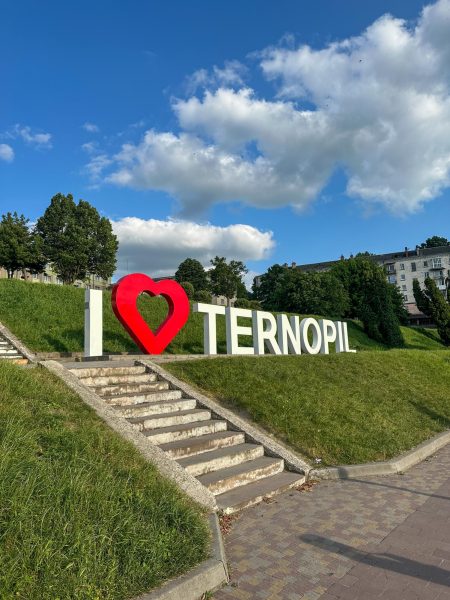
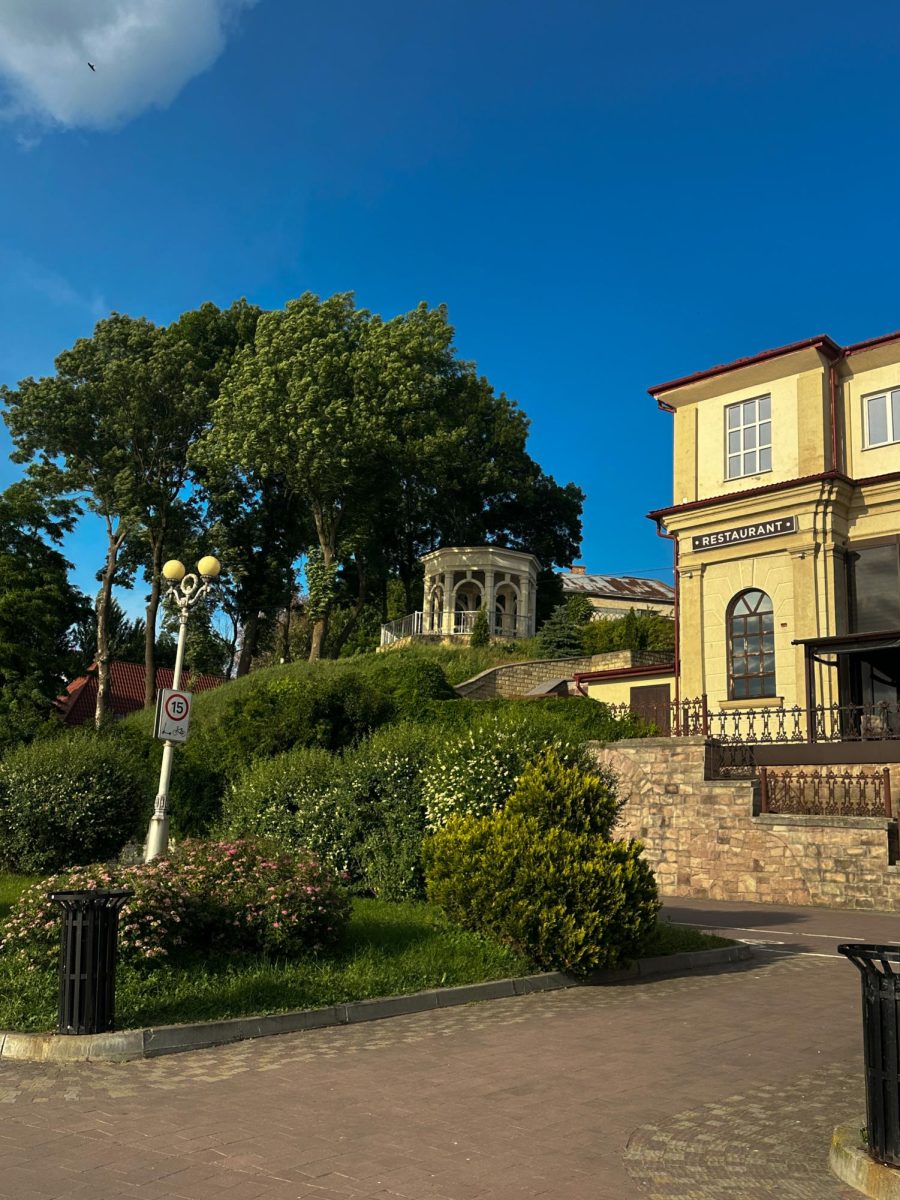
They found us seats. The next day we flew to Germany, and from there to Poland. In Poland, a friend was waiting for us and drove us by car from Poland to my hometown of Ternopil, Ukraine. Ternopil is a beautiful city in western Ukraine, known for its picturesque lake and an old castle on its shore. The city is very green, with many parks, small squares, and cozy cafes and restaurants offering delicious food. Ternopil is home to many universities and colleges, which is why it is often called a city of students.
During the war, Ternopil became a place of refuge for many people who were forced to flee from areas where active fighting was taking place. Because it is located farther from the front line, the city became something of a “Noah’s Ark” for those escaping shelling. However, when I arrived, I saw that even here the war had left its marks. Residential buildings had been hit, making it clear that in war there is no place that is truly safe.
That is how my journey began.
First Night: Bombardment
We hadn’t slept for two nights, and when we entered our house in the evening—exhausted and full of joy that we were finally home—we took showers and fell asleep.
We were so tired and so happy that in our sleep we did not hear the air-raid siren. Russia launched missiles at our city.
This video shows the impact of one missile and then a second missile, as well as the sounds of air defense systems intercepting Russian missiles. It was recorded in my neighbor’s apartment at about 3:43 a.m.(June 6, 2025), shortly before we went down to the shelter.
In the background, my neighbor can be heard speaking in Ukrainian. He says things like: “Oh, something started burning,” “Well…,” and “These are our kinds of discos,” which is a dark, ironic way of referring to the explosions.
We were sleeping with the windows open, and the sirens were wailing loudly, but the exhausting journey took its toll. Our neighbors didn’t know that we had arrived, so they didn’t knock on our door to tell us to run to the shelter, and my mom, my sister, and I were just sleeping. Then two loud explosions went off. My mom ran into our room, screaming that we had to run to the shelter. I heard the “Shaheds”—kamikaze drones—and other drones flying over the building. They were so close, their sound was like the roar of a motorcycle. We ran out in our pajamas, only grabbing a backpack with the documents we had arrived with just a few hours earlier.
We could hear explosions, and from the window I saw buildings and a gas station exploding (later it turned out that the hit was on car dealerships and the gas station). We ran into the yard, the neighbors saw us, and we all hid in the underground parking of a nearby building. There were many people, pets… everyone was terrified, trembling, and praying. We heard drones and missiles flying, and we heard the interceptors chasing the missiles. That’s when I understood that Russia does not want peace. It shoots at civilians who are sleeping, at children who are just beginning their lives.
Toward morning, the siren sounded again—this time it was the all-clear.
This video shows the view from my window at dawn. You can see a column of dark smoke rising from the location where a missile hit. In the background, you can hear the air-raid siren signaling the all-clear. This video was recorded on June 6, 2025, at approximately 5:02 a.m.
That is how my first long-awaited day on my native, much-suffering land—Ukraine—began.
We came only for two weeks (the length of my mom’s vacation). That is a very short time for such a journey, and we also lost one day because of the airplane.
Returning to Family and Childhood
We were so exhausted by everything that we went to a small town near Ternopil, where my mom was born and where her sister lives with her family now. My own childhood also passed there. It is a bright, beautiful house with a wonderful garden, flower beds, and green lawns. That is where we spent most of our vacation.
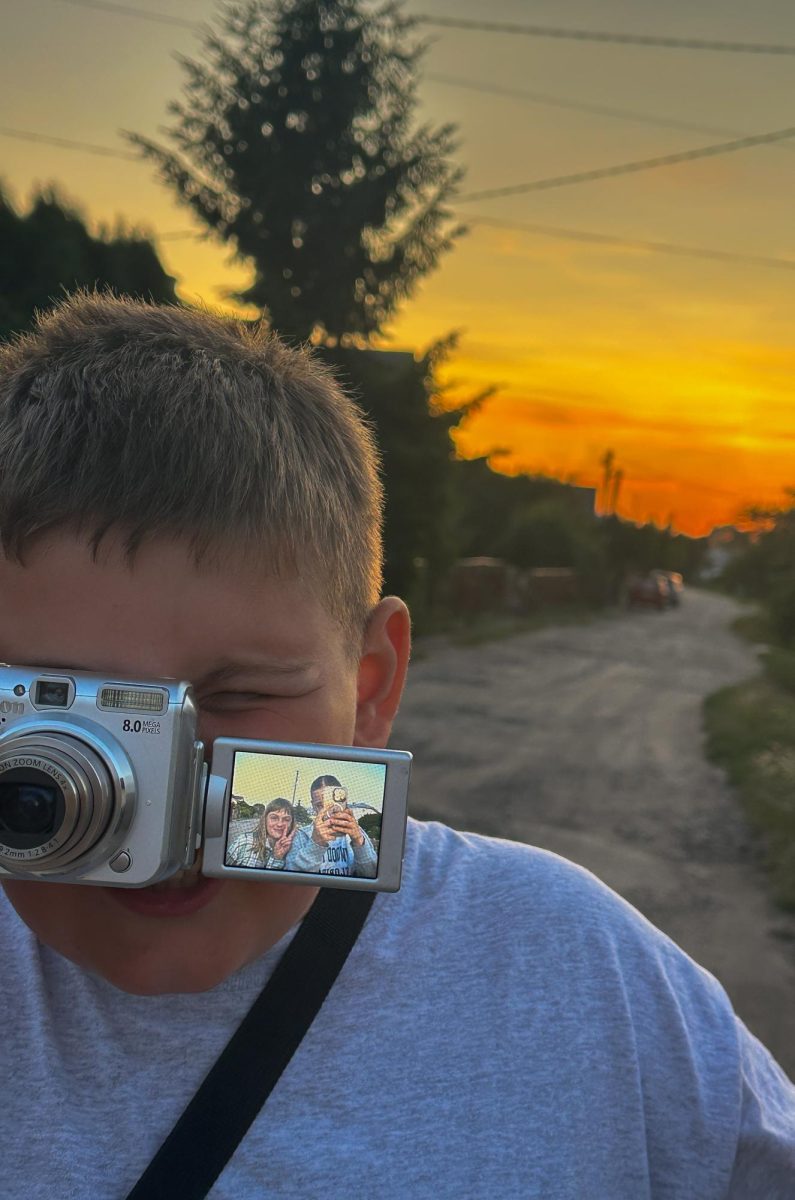
Of course, the war is everywhere, across all of Ukraine, but in a small town I felt safer. I met with friends who told me about school, about mutual acquaintances, about those who are no longer with us. Our memories, intensified by emotions and the joy of reunion, came in waves—first joy, then sadness, pain, and tears.
I was so happy that “they are here,” that I had returned and could hear them, see them… They asked me to tell them how my life had turned out, what was new, what was similar between the two countries, and what was different. I thought for a moment and then said, “There is no war there.” I said that every country has something of its own: contradictions, doubts, dissatisfaction, decisive actions and inaction, progress and lack of it. But the one thing that is needed everywhere and by everyone is peace. It is the one thing that keeps balance and allows families, communities, nations, states, and the whole world to exist. It is peace. Russia has taken that from Ukraine. It took it from families who lost someone in the war; from communities—by destroying villages, cities, and entire regions; from the state—by destroying all spheres of life; and from the world—because Ukraine is a European country, it is a part of the chain where the loss of one element destroys the balance of the entire world.
Daily Reality of War
Every day I heard the wail of air-raid sirens… deadly missiles and Shaheds were flying. Every time we read in messages which direction they were flying. And again, hits in peaceful cities. And again, victims—among them children.
Often, at night or during the day, while waiting for the all-clear, I thought, “For what? For what did this war begin?” Animals attack and kill for food—they are hungry—or to expand their territory. And the Russians? Are they starving, or is there overpopulation? A laugh through tears. But the answers to these questions are sought by mothers whose sons have been killed by the war, by children who became orphans, by women who became widows while still young, with small children in their arms. Why did Russia attack? Because it was hard for it to watch our Ukraine live in prosperity and make progress in all spheres? Is that not so? Many will say that I am too young to understand this, that I am not competent in politics, economics, or global geopolitics; that it is hard for me to understand what it means to “properly” set priorities, how to correctly choose who will be the victim, whom to hand over to the enemy. Yes, that is true. I cannot understand how it is possible to kill innocent people in their homes, to torture and execute captured soldiers, to burn children alive in houses they could not escape from after a missile strike. No, I do not understand this—perhaps because I have what makes me human: a heart, a soul, and a conscience.
Life Continues Amidst War
Recently, nine missiles hit my city; two of them struck residential buildings. Thirty-eight people were killed, eight of them children. This is the horror of war. But you know, even in this hell, people try to live. They support one another, try not to lose hope, and they hope. They hope that the war will end, because just as day replaces night and spring replaces winter, peace will replace war. People live and believe.
When air-raid sirens are not wailing, when no missiles or drones are bringing death and destruction, people go to work. The smell of freshly baked bread drifts from bakeries, and the aroma of rich coffee comes from cafes. Shops open, as do government offices and businesses, and during the school year—schools, institutes, colleges, and kindergartens are open.
In this calm time, I saw that people remember their former, pre-war life: near their homes and in small parks, they plant flowers; from outside the city, from rural areas, they bring freshly grown vegetables, fruits, and berries. People bring seedlings of trees, bushes, and flowers and sell them—to plant them… for the future. And I realized that faith in something better is unbreakable; it cannot be taken away.
Have you ever seen a break appear in a storm cloud, with a ray of sunlight breaking through it? That ray gives hope that the storm will soon end. That is exactly what it is… Hope…
I hoped and believed that I would go to Ukraine—and I was there. I hope for peace and believe that it will surely come.
But time keeps running, and the two weeks flew by very quickly. We had to prepare to leave. It was hard. On June 25, we left Ukraine and headed back. That was my journey to my homeland—I was home, in Ukraine. My trip was not as exciting or as multifaceted as Michelle’s. Even though pain tears my heart apart and my eyes are full of tears from horror, I am happy that we had someone to go to. All our thoughts and prayers are with them. I believe and sincerely hope that the countries friendly to Ukraine will help stop this destructive, terrorist state, because Ukraine—by a miracle and with a previously unknown strength of spirit and patriotism—is holding back this horde. But Ukraine is small in territory and population, and Russia is large, full of hatred and cruelty. And if we do not stop it, if we cannot contain it, Russia will not stop at Ukraine—it will go further.
I returned to the United States and I’m telling about it. I talk about it because I was there and saw everything with my own eyes, because I want this to be heard firsthand.